Blog

Nanyuki’s Three-Day Sports Compeition

DSC_0206

Most Daraja girls were busy between Thursday and Saturday of last week, when they participated in Nanyuki’s three-day sports competitions. On Thursday, February 21, the 22 Daraja students who comprise the school’s track-and-field team boarded buses by 7 a.m. and drove 25 kilometers to Nanyuki town, where they joined more than forty other high school teams at the Nanyuki Municipal Stadium. Three Daraja Kenyan Scouts (Doreen, Dianah, and Ann W.) accompanied the team – at their Scouts training they’ve learned about first aid, so their duty was to assist with any (moderate) injuries their athletes might face.

The stadium – an outdoor arena comprised of a large track and some seating – was teeming with hundreds of local youth, high school staff, judges, and athletes’ supporters. It was hot, sunny, and dusty – it hasn’t rained in Nanyuki in months – but students were too busy preparing for their events and cheering each other on to complain about the heat. From morning till late afternoon, the hundreds of athletes participated in a wide array of track-and-field events, including various runs, sprints, fast walking, hurdle-jumping, and discus- and javelin-throwing. Amazingly, many, if not most, of the participants ran barefoot, because, as Daraja students have explained, running with shoes feels too “heavy.” Daraja girls stood out amongst the crowd as, perhaps, the team that cheered the most loudly for one another. While their peers participated, Daraja students lined up by the fence lining the track, screaming and applauding, encouraging their athletes onward. And, as soon as one of their own had finished an event, Daraja spectators were quick to meet them outside the track with high-fives and glasses of water. In fact, the athletes had more than just support from their peers – local parents showed up, and even last year’s Form 4’s who live nearby came to support their former classmates.


Four Daraja girls excelled that day, and on March 12 they will travel to Nyahururu (a four-hour drive from Nanyuki), where they’ll compete in the next leg of the tournament. Jamaica, Form 4, will compete in discus; Caroline, Form 2, will compete in fast-walking; Joan, Form 2, will compete in high jump; and Lisayo, Form 4, who was incredibly impressive Thursday, will compete in four events – 100 meter hurdle, 400 meter hurdle, triple jump, and long jump. (This is especially impressive given the fact that Daraja doesn’t actually have any hurdles, so the girls have never practiced on them.)


On Friday, Daraja’s fifteen-person netball team and twelve-person basketball team headed to Nanyuki early in the morning to compete in the next part of the competition. The basketball team, which is new this year and had never competed before, managed to finish third of eight teams; meanwhile, the netballers won both of their two games that day and returned to Nanyuki Saturday for the final two matches, which they also won. So, the netballers will accompany Jamaica, Caroline, Joan, and Lisayo to Nyahururu on March 12 to compete in the district netball competition.

Stay tuned for more news about these exciting competitions, as well as in-depth analyses of some of Daraja’s most skilled athletes. Later this week we’ll pose this question: How can Lisayo, who comes from poverty, be such a skilled runner, and could this talent impact her future? Her – and others’ – talents are definitely impacting Daraja’s present, by uniting Daraja students via strong school team spirit.

Share and Enjoy:
  • Facebook
  • Twitter
  • del.icio.us
  • Google Bookmarks
  • Digg
  • StumbleUpon
  • LinkedIn
  • Yahoo! Buzz
  • Print
  • email
  • MySpace

Daraja’s student selection and KCPE scores

15106_10151173132821902_2064245535_n

Remember just a few short months ago when Daraja’s first-ever graduating class sat for their KCSE exams for three weeks straight in November?  Well, there is another test that’s similar in importance, called the Kenya Certificate of Primary Education (KCPE) whose scores were released at the end of last month.  These exams are taken at the end of primary school by Class 8 students (eighth-graders) and are a very important factor in Daraja’s selection process for the new class of Form I’s.  Before the exam, students fill out a form indicating four to eight schools they would like to attend (including one national school); then, once the scores have been released, the schools select students based on “candidature and affirmative actions” – learn more here.  Those with the highest scores are invited to attend national schools; following in rank are provincial schools, then district schools.  Daraja Academy has a different selection process.  Unlike most secondary schools in Kenya, Daraja goes in search of its students (learn more about that process here.)  Daraja staff wait until KCPE scores have been released and then travel all across Kenya to interview applicants, with KCPE scores being a very important factor.  Daraja is different again from other schools in that it looks not only for girls who achieved high scores on their exams, but also have excellent leadership skills, confidence, a strong desire for education, a willingness to go back to their own communities and teach what they hav been taught, (tribal) diversity, and an inability to afford school on their own.  One of the questions Daraja staff have asked in student interviews is, “What will you do if you don’t get accepted to Daraja?” and they especially love applicants who are emphatic that they’ll find a way to go to school regardless of the outcome!

New students receive a huge, warm welcome when they arrive on campus for the first time

Share and Enjoy:
  • Facebook
  • Twitter
  • del.icio.us
  • Google Bookmarks
  • Digg
  • StumbleUpon
  • LinkedIn
  • Yahoo! Buzz
  • Print
  • email
  • MySpace

Daraja searches for its newest freshman class

DSC_0318

Daraja is quiet right now, or at least quieter than it usually is. There are only three classes here – Forms 2, 3, and 4 (10th – 12th grade) – meaning that only 79 students are on campus right now. Soon, though, there will be  a new freshman class and group of Transition Program participants (last year’s Form 4s).   By April, there will 130 students bustling on campus.


Until then, the Daraja administration has begun their search for the freshman class, a yearly tradition that takes place around this time for three weeks. Deputy Principal Victoria, Dean of Curriculum Charles, Transition Program Director Carol, and longtime advisor Stephanie Danforth are touring the country for almost three weeks in search of prospective Daraja girls.


This process is very unique. Danforth explains that Daraja is the only school in Kenya to actively travel to find and recruit its students. Kenyan secondary schools, she explains, often wait for student applications to flood their offices; then they choose students based on their grades and test scores. Daraja is different. Yes, grades and test scores are important, but they are by no means the only qualifying factors for prospective students. In fact, there have been cases where Daraja has had to choose between a girl with higher marks and a girl with lower marks who possesses that certain Daraja-je-ne-sais-quoi (i.e. a wide array of leadership qualities), and has chosen the latter. Their process works, too. Danforth has sponsored numerous students throughout East Africa and she has noticed a distinct difference with the Daraja girls that she sponsors. At other schools, she explains, students can often be more reserved. Daraja girls are the opposite – even the shy students are not afraid to speak up or take charge, demonstrating the leadership quality that is pivotal to any Daraja student and ultimately global leader.


This week, the four interviewers are traveling to Western Kenya – Kisumu area – where they will interview prospective students from various locations, including schools in the region. They’ll spend each day interviewing students, then return to Nanyuki where they’ll conduct local interviews. Then, they’ll head to Eastern Kenya – the coastal regions – for the last week of interviews.


Some girls have mailed application letters to Daraja and will be expecting interviews; others will learn of the interviews from primary school teachers or friends once Daraja staff have arrived in their town and will interview on the spot. Then, Daraja interviewers will return to Daraja with piles of notes and spend hours evaluating which students to admit based on Daraja’s admissions criteria.

The new Form 1 class will report to school on March 22, so stay tuned for more details about the interview process and incoming students!


Share and Enjoy:
  • Facebook
  • Twitter
  • del.icio.us
  • Google Bookmarks
  • Digg
  • StumbleUpon
  • LinkedIn
  • Yahoo! Buzz
  • Print
  • email
  • MySpace

Poem by Daraja student Yvonne

Changesinschool copy


If you’ve been to Daraja in the last year, you’ve met Yvonne. You probably remember Yvonne well, because she probably went out of her way to meet and greet you, with her enormous smile and contagious laugh. She is one of the most friendly and outgoing students at Daraja, and came to this school in an interesting way.

Yvonne’s mom passed away when Yvonne was in the fifth grade, so her grandmother became her guardian. When her grandmother passed in 2009, Yvonne moved in with her aunt and sister in the Majengo slums in Nanyuki (25 kilometers from Daraja’s campus). That year, she finished eighth grade but her aunt could only afford to send her sister to school, so, as Yvonne explained (in her application to Daraja), “I then decided instead of staying idle I should repeat Class Eight and that is what I did. I worked so hard, besides being sent home for school fees.” She took her Kenya Certificate of Primary Education (KCPE) a second time and got a good score, so her aunt decided she should go to secondary school. However, she wrote, “Most of the time I stayed home while my sister went to school which made me feel very neglected. I still didn’t lose hope and I did odd jobs and after I got the money, I would pay my [school] fees.”

One day, Yvonne noticed Daraja student Doreen in town wearing a Daraja shirt. She followed her into a grocery store and when Doreen finished shopping Yvonne approached her and asked for her phone number because she wanted to know about Daraja. She called her daily, and finally Doreen told her how to get to Daraja and how much public transit would cost. Yvonne got a job doing casual labor – digging for farmers – and saved up enough matatu (bus) fare to go to and from the school, where she went and asked the administration if she could attend Daraja.

If the fact that Yvonne deliberately repeated 8th and 9th grade in order to stay in school isn’t testament enough to her passion for education, maybe the following will be. Yvonne, who dreams of being either a neurosurgeon or flight hostess, loves writing poetry. Here’s a poem she wrote yesterday for the Daraja family:


My Bridge! My Future!


Have you heard of a story?

Was it a story or a fairytale?

Was it sad or sweet?

Did you laugh or cry?

Then here is the story…


Before I got to Daraja, I never thought I would get here

I worked hard towards my destination,

Although being out of school made me so emotional,

I never gave up my ambition,

Because I knew there was a solution


I kept on doing my best in my society

For this was my priority

And always humbling myself to the Deity


Soon the best came of it

My yearning became my earning

My hard work became my success,

When I was chosen to be part of Daraja


Tears of joy rolled down my cheeks

As happiness dug a deep cavity in my heart

Being part of Daraja means a lot to me

Giving me a chance to learn is one of the best things that I am offered

Forever may Daraja live

To accomplish the dreams of many

                                                               By Yvonne Njeri

Share and Enjoy:
  • Facebook
  • Twitter
  • del.icio.us
  • Google Bookmarks
  • Digg
  • StumbleUpon
  • LinkedIn
  • Yahoo! Buzz
  • Print
  • email
  • MySpace

Football (or “soccer,” as it’s called in America) at Daraja

DSC_0159


Sports are an important part of Daraja Academy, and many students are athletic in a variety of different ways. Football/soccer is one of the most popular sports in Kenya, matched in popularity only, perhaps, by running, and children who have the opportunity learn to play from an early age. 11 Daraja girls comprise its soccer team, only two of whom are Form 2s (the others are older). Josephine and Caroline, Form 2, love soccer and love being apart of this team. Josephine has been playing soccer since the fifth grade, and Caroline since the seventh. Both got to play at primary school, and practice at home on holidays. Last week, they played against some Danish volunteers who live nearby and, as per usual, beat them. “We play against them four or five times a year,” explained Josephine. “Last year they won once, I think.”


“They were good but we beat them,” explained Caroline – the score was 3 to 0. This reporter is not, and has never been, remotely athletic, so I’m always genuinely interested to learn why people “do” sports. I asked Josephine why she thinks soccer is fun when it involves so much running, which, in my experience, only causes pain, shortness of breath, and excessive sweating. She nodded, understanding my explanation, and countered with one of her own – ” When you feel pain you can still play through the pain. You reach a point where after awhile it just goes away and you keep playing,” she said. I’ve heard this explanation before, and while it sounds kind of mystical and unbelievable, enough people have suggested something similar that they must be on to something. But why, I asked, would you want to endure that initial pain in the first place? “When you had stress, you begin playing and you are relieved of that stress,” said Caroline. This actually makes sense, especially in light of the academic rigor Daraja girls face everyday. I can only imagine that, after working the mind so incredibly hard for hours each day, it must be sort of nice to leave all that behind for a few hours and think about nothing but scoring goals on the soccer field. Plus, explained the girls, there are other benefits to team sports – “When we go to play against another team we get to socialize and make new friends,” said Josephine. In addition, their own team bond is strengthened - “We become closer even off the field because you get united because you all want to win,” said Caroline. Check out these pictures from the girls’ match agains the Danes, and maybe if the reader has, like this author, a strong distaste for “working out,” these young athletes’ eloquent explanations might help change his/her mind.


Share and Enjoy:
  • Facebook
  • Twitter
  • del.icio.us
  • Google Bookmarks
  • Digg
  • StumbleUpon
  • LinkedIn
  • Yahoo! Buzz
  • Print
  • email
  • MySpace

Annual Prefect Elections held, Daraja Academy has a new student head girl!

DSC_0149


Daraja students returned to school Saturday, January 5, after a two-month school break. One of the first orders of business was prefect elections – between Monday and Friday the 11th, girls had time to nominate one another for any of the 11 positions and petition for votes. Daraja has had prefects since its first class in 2009, and while most of the positions are still the same, a few have been added as the school has expanded (including Farm, Computer, and Compost Prefects). The 11 prefect positions include prefects for dining hall, sports, library, compost, environment, shamba (farm), compost, one for each of the three dormitories, and Head Girl.

            On Friday afternoon, the student body and staff gathered in the patio for elections. The position of Head Girl was uncontested and taken by Esther Wa, the only student nominated by her peers for this position, which is comparable to a student body president position in the U.S. Esther is a Form 3, and last year also served as prefect to one of the dormitories. Two to three girls were nominated for the remaining ten positions, and each nominee had the opportunity to explain why she sought the position. Some were interested specifically in the topic of the position – for example, Florence, Form 4, ran for Environmental Prefect, she explained, “because I have passion for environment and I want to be an environmentalist. I thought it’d be good for me to start practicing my skills now before I reach my career goal.” Others wanted to follow in the footsteps of their “mothers” or “grandmothers” – Daraja girls are divided into families composed of one girl from each form, and since many of last year’s admirable Form 4s held prefect positions, their younger protégés wanted to continue the positions their mentors had held. Irene N., Form 3, gave an impassioned speech (see below) for Library Prefect, explaining that she was disappointed the students didn’t receive Kenyan newspapers in a timely fashion. If elected, she promised to keep the students up-to-date on current events, using staff to aid her in transcribing news throughout the day on a blackboard in the library. Rosalia wanted to be a Dormitory Prefect because “I love serving people and being there for them. If anyone gets sick during the night I might be of help. I love being close to the girls – being a Dormitory Prefect, I’d be closer to the girls than in any other field.” Sometimes, winning the position of prefect means gaining experience for later years – for example, Asuza, who is a Form 2, ran for (and won) Dining Hall Prefect because she hopes to be Head Girl next year.

            Following their speeches, students voted and an hour later results were announced:Asuza was elected Dining Hall Prefect; Jemima won Shamba Prefect; Lisayo won Sports Prefect; Irene N. won Library Prefect; Irene M. won Computer Prefect; Florence won Environment Prefect; Sylvia won Compost Prefect; and Yvonne, Fatuma A., and Rosalia were elected Dormitory Prefects.

            Prefects’ duties include bringing student affairs in harmony with Daraja staff, maintaining the general hygiene of the school, ensuring students are dressed in full uniform, collaborating with and helping their prefect colleagues, attending to students’ complaints, communicating information to students from staff, ensuring school property is respected, helping students who are personally struggling, and communicating information from the Head Girl and/or Dorm Matron. “It’s a way of linking teachers and students,” explained Deputy Principal Victoria. “In the absence of a teacher they’ll oversee the leadership position. The students will use them to pass any info to the administration – it’s a way to maintain some sort of structure in the student body. The Head Girl is the overall prefect. She’s in charge of the rest of prefects and the whole school.” Of course, the prefects are encouraged to maintain a balance between their leadership positions and schoolwork, and were instructed not to take their positions “to the extreme.”


Check out Irene’s passionate campaign speech to be Library prefect- she won! Congrats Irene!

YouTube Preview Image

Share and Enjoy:
  • Facebook
  • Twitter
  • del.icio.us
  • Google Bookmarks
  • Digg
  • StumbleUpon
  • LinkedIn
  • Yahoo! Buzz
  • Print
  • email
  • MySpace
 
Page 4 of 45« First...«23456»102030...Last »


Upcoming Events

Join us for the
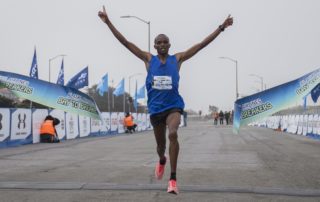
Race for Daraja 2013 // Bay to Breakers
May 19th!

Attend a premiere of Emmy-winning filmmaker Barbara Rick’s films!

Media Room

Check out our media room for the latest news, press releases and fundraising material.

Website photos: Barbara Rick

Contact Us

Office:
1005 A Street #214
San Rafael, CA 94901


Donations:
DEPT 34546
P.O. Box 39000
San Francisco, CA 94139


Correspondence:
P.O. Box 4333
San Rafael, CA 94913

Follow Us

Stay connected and learn about what the girls are doing!

facebook twitter Videosread our blog

Join ournewsletter